None of what follows is legal guidance, and the specifics of what any organisation is required to do vary by country and by circumstance. What it is is a set of practical design choices that widen the door.
Describe the terrain honestly — this is the biggest single lever
Most of the exclusion caused by netwalks is not caused by the route. It is caused by the description of the route. "A gentle stroll" and "an easy walk" are meaningless to somebody deciding whether their knee will manage it, and they are the two phrases organisers reach for most.
An honest description contains the specifics that let a person decide for themselves:
- Distance, in kilometres or miles, and expected duration at a talking pace.
- Surface: sealed, gravel, grass, field path, mixed.
- Number of stiles, gates, steps and any kissing gates — these are absolute barriers for some people, not inconveniences.
- Total ascent, or at minimum whether there is a sustained climb.
- Likely conditions underfoot in the current season.
- Whether there are benches or natural stopping points.
- Whether there is a toilet at the start, and whether there is one on the route.
- Distance from the parking to the actual start point.
That list takes two minutes to write and removes almost all of the guesswork. It also protects the organiser: nobody arrives in the wrong footwear for a route that was described accurately.
Pace is a design decision, not a personality
The pace of a group walk is set by whoever is at the front, and if that is left to chance it will be set by the fastest walker. A conversational pace is roughly three to four kilometres an hour, which feels slow to a regular walker and is the correct speed for this format.
Three practices keep it honest:
- Name a pace-setter. Someone walks at the front with an explicit brief to hold a conversational speed, and to check behind them regularly.
- Name a back-marker. Someone walks at the back, talks to whoever is there, and never overtakes the last person. This single role fixes most string-out problems.
- Regroup at every junction. Not just at the designated reshuffle. It costs a minute and it means the back of the group is never navigating alone.
If a walk consistently has people struggling at the back, the answer is a slower or shorter route, not encouragement.
Choosing a genuinely accessible route
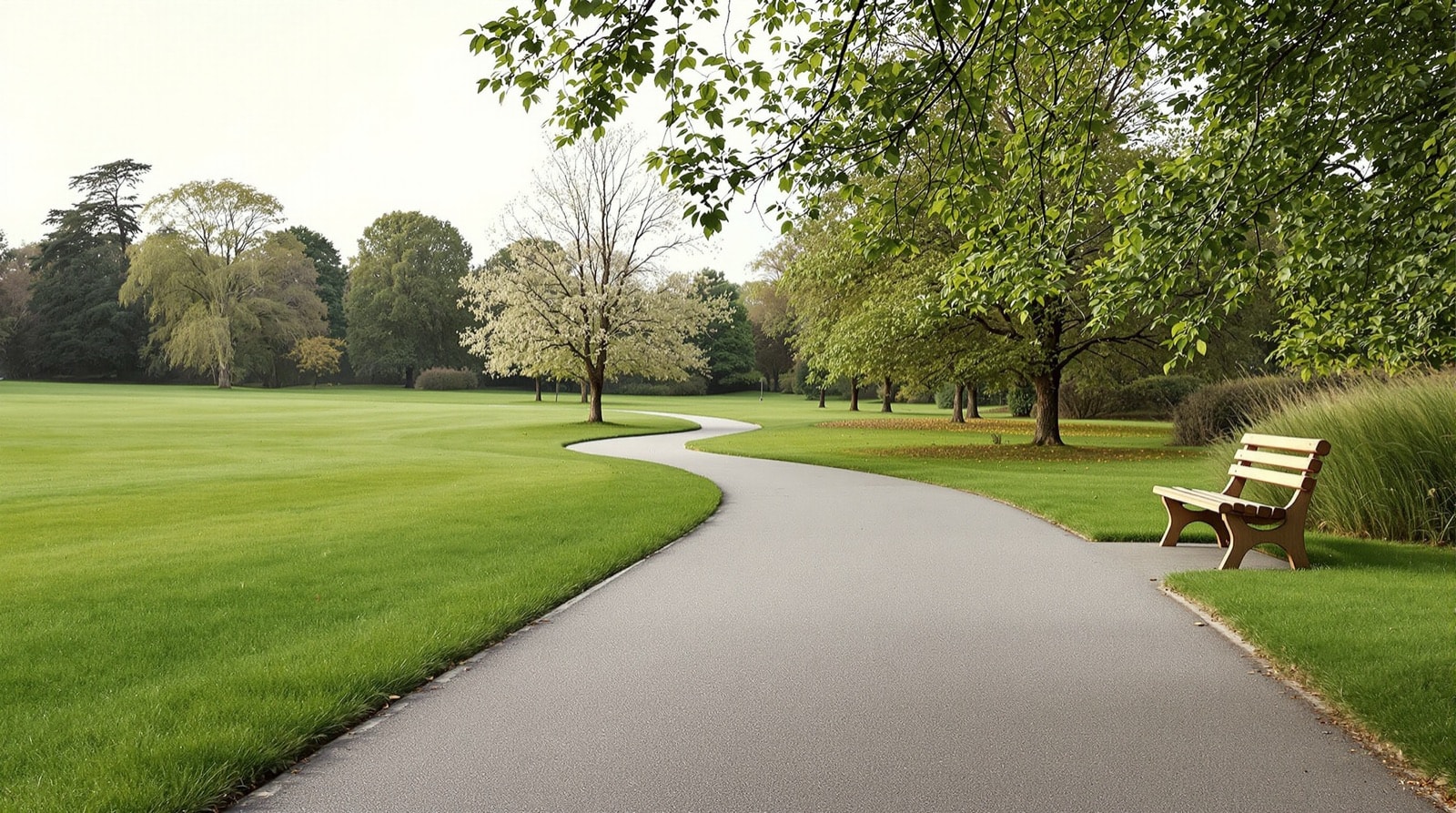
Some routes can be walked by nearly everybody, and they tend to share features: a sealed or well-compacted surface, no steps or stiles, gates rather than barriers, generous width, level or very gently graded ground, benches at intervals, and parking close to the start. Disused railway lines, canal towpaths with good access, arboretum and country-park paths, and promenades all commonly qualify.
ADA.gov guidance and resource materials is a useful reference for the underlying principles of accessible design — width, gradient, surface firmness, resting places — even where the specific regulations do not apply to a private walking group. The principles travel; the legal detail does not.
A pragmatic pattern used by many groups is rotation: an accessible route every other event, published clearly as such, with the more demanding routes in between. That is honest, it is achievable, and it is far better than a single compromise route that satisfies nobody.
Shorter options within the same walk
A well-chosen loop often allows a shortcut that rejoins the main route. Publishing that option in advance — "there is a two-kilometre version that rejoins at the bridge" — lets someone attend without having to announce a limitation. The shortcut should be described as a normal choice rather than as a concession, and ideally the organiser or a regular walks it too, so that nobody is doing it alone.
Things that are not about mobility
Accessibility on a walk is broader than terrain, and several barriers are easy to miss:
- Hearing. Wind, traffic and walking side by side all make conversation harder. A quiet route helps everyone and is essential for some. Threes are harder to follow than pairs for anyone lip-reading; a pair on a quiet path is much easier.
- Timing. Early-morning starts exclude people with school runs and caring responsibilities; a rotating time widens the group substantially.
- Cost and kit. If a route effectively requires proper boots and waterproofs, that is a financial barrier. Routes that can be walked in ordinary trainers are more inclusive than they look.
- Toilets. The absence of a toilet at the start rules out attendance for more people than most organisers imagine, and it is rarely mentioned.
- Arriving without a car. A route reachable by public transport opens the group to people who do not drive.
Asking, without singling anyone out
A single neutral line in the booking information does most of the work: "If there is anything that would make this walk easier for you to join, let the organiser know." It invites a private message, it does not require anyone to disclose anything, and it signals that the question is welcome.
What does not work is asking publicly on the day whether everybody will be all right with the route. By then people have committed, and admitting difficulty in front of a group is a cost most will decline to pay.
Health framing
Organisers should be careful not to drift into health advice. Walking is broadly beneficial and NHS exercise guidance sets out what that means at different levels of mobility, but a netwalk organiser is not in a position to advise anyone about their own condition. The right posture is to describe the walk accurately and let people apply their own judgement — and, where relevant, their clinician's.
Offer equivalent participation, not a special case
An accessible alternative works best when it is published before anybody has to ask. If the main route contains barriers, state an equivalent option: a shorter level loop, a seated conversation near the meeting point, or a start-and-finish session that joins the same introductions. Name who will accompany each group and make sure both options include the planned pair changes.
Equivalence matters. Sending one person back early while everybody else continues the useful part of the event is not the same experience. Nor is asking someone to explain personal information to earn an adjustment. Frame the choice around route facts and preferences: give the distance, surface, gradients, obstacles and likely duration for each option, then let people choose without supplying a reason.
Test every option as a real route, including its timing, surface, noise and meeting points. Brief the walk leaders so a change does not become a surprise on the day. If weather alters the conditions, explain that before the start and preserve the level, shorter or seated alternative. Accessibility belongs in the running plan, not in a kindness improvised while the person who needs it is watching.
The measure of success
The useful question is not whether anybody complained. It is who is not there. A netwalk attended entirely by people who could walk ten kilometres without noticing has selected for that, probably without meaning to. Widening it is mostly a matter of better descriptions, slower pacing and one accessible route in the rotation — none of which costs anything except attention.