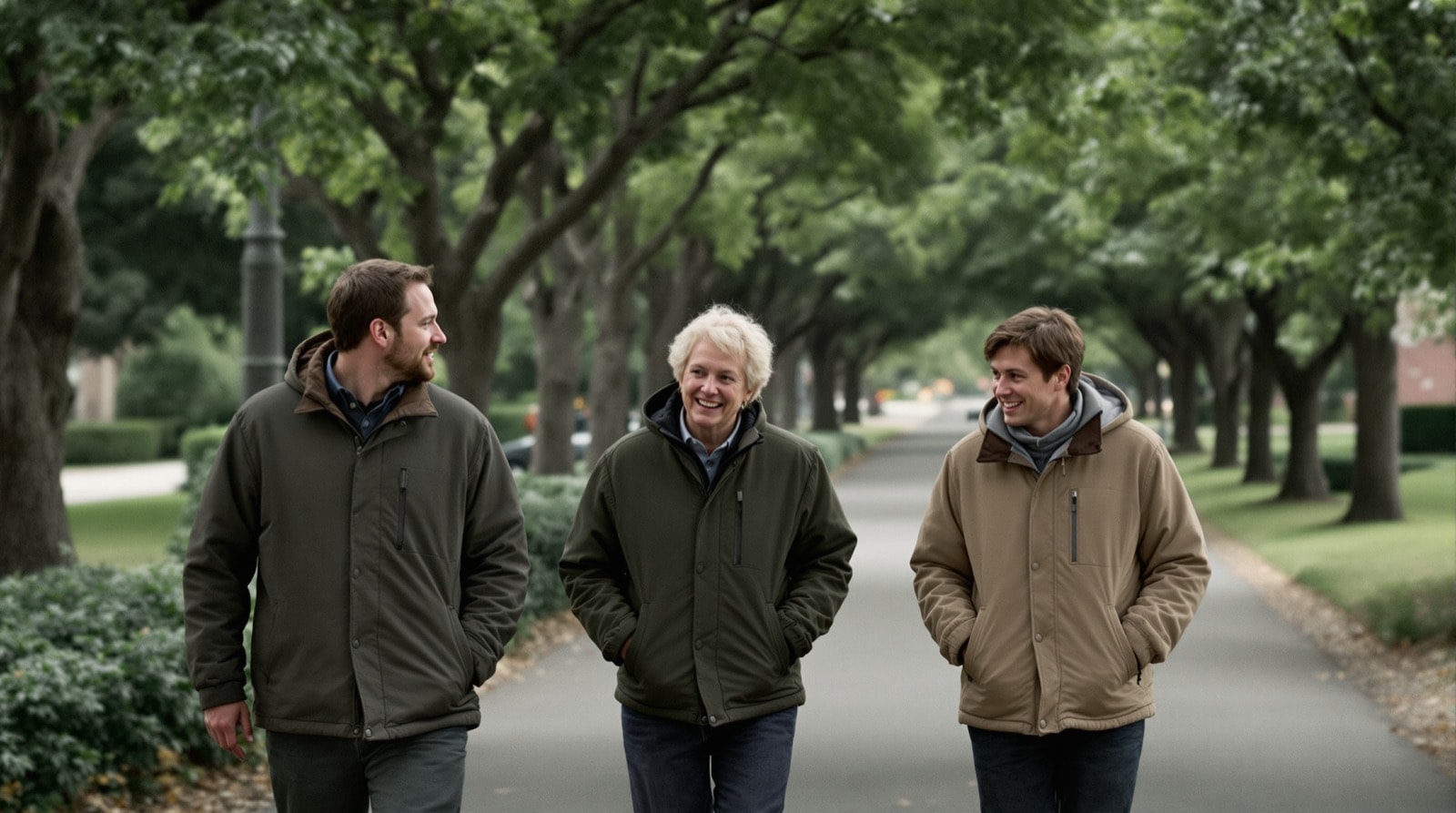
Opening the conversation
Resist the elevator pitch. The single most common newcomer error is to deliver a polished thirty-second description of the business in the first minute, because that is what the seated format trains people to do. On a walk it lands badly: it is a performance, and there is nobody watching.
Better openings are ordinary. Have you walked here before. How did you find this group. What has your week been like. The work will come up within ten minutes without being summoned, and when it does it will come up as a description rather than a pitch — which is the whole reason for walking.
Pitching, and when to stop
There is a straightforward test. If the other person has asked what you do, describe it as fully as they seem to want. If they have not asked, do not tell them at length. A netwalk gives you thirty uninterrupted minutes with someone who cannot leave, and using that as a captive audience is the fastest way to be remembered badly.
The people who get the most out of this format are, almost without exception, the ones doing the most listening. That is not a moral observation; it is a mechanical one. Introductions and referrals come from understanding somebody's problem well enough to think of the right person, and you cannot do that while talking.
Pace is a courtesy
Match the person you are walking with, and match downward. If your natural pace is faster, slow to theirs without commenting on it. Nothing sours a conversation faster than being made aware that you are the slow one — and once someone is slightly out of breath, they stop contributing and start managing their breathing.
If you are near the front of the group, look back regularly. A group where the front never looks back will always split. More on this in accessibility and pace.
Changing partners
Changing partners is expected, announced and impersonal — which is exactly why the organiser should do it out loud at the regroup point. If the reshuffle is left to individuals, it becomes a social judgement and people avoid it.
Two conventions make it work. First, when the reshuffle is called, move — even if the conversation was going well. You can pick it up at the end or afterwards. Second, if you notice someone walking alone, join them. Somebody ending up on their own is the one genuine failure state of a netwalk, and every regular can quietly prevent it.
Groups of three
When numbers are odd, threes are not a consolation prize. They are often the better configuration, particularly for a first-timer or for anyone quieter than the average. In a three, the etiquette is simply to notice: if one person has said nothing for five minutes, ask them something directly.
What not to raise
The conversational range on a walk is naturally wider than in a meeting room, and that is part of the appeal. A few things stay outside it. Do not use the enforced proximity to press a sale, ask for an introduction to someone's biggest client, or extract free professional advice at length — a single question to an accountant is friendly; twenty minutes of it is a consultation you did not pay for.
Politics, personal health and money are the usual landmines, and the fact that you are outdoors and relaxed makes it easier to wander into them than you would indoors. The general test is whether the other person can gracefully decline the topic. On a footpath, they cannot walk away, so the burden of restraint sits with whoever raised it.
Phones
Keep the phone away. Taking calls on a netwalk is unambiguously rude in a way that it is not in a hotel foyer, because your partner is stranded mid-path with nothing to do. If you are genuinely expecting something urgent, say so at the start and drop back when it arrives.
Photographs are a slightly different matter. Group photographs are common and usually welcome, but ask before posting anyone's picture anywhere. Not everybody wants their attendance at a business event to be public.
Dogs, and other people's
Many walks welcome dogs and the policy should be stated in the joining information. If you bring one, it walks on a lead near livestock and near people who did not ask for a dog. Assume at least one person on any walk is nervous of dogs and would rather not say so.
The follow-up
Good follow-up is small, specific and prompt. Within a day or two, connect with the people you actually walked with and reference something concrete from the conversation. If you offered an introduction, make it within the week — an unfulfilled offer is worse than no offer, because it was remembered.
What corrodes a group is bulk follow-up: connecting with every name on the attendee list and then sending the same message to all of them. It is transparent, it converts nothing, and in a small group it becomes common knowledge quickly. Adding people to a mailing list because they walked beside you for half an hour is the same error with a worse ending.
The underlying principle
Almost all of the above reduces to a single idea: the format works because it lowers people's defences, and that only stays true if nobody exploits it. A netwalk is a low-pressure environment maintained by mutual restraint. Every group that has fallen apart has fallen apart for the same reason — one or two people treated the openness as an opportunity, and everyone else quietly stopped opening up.