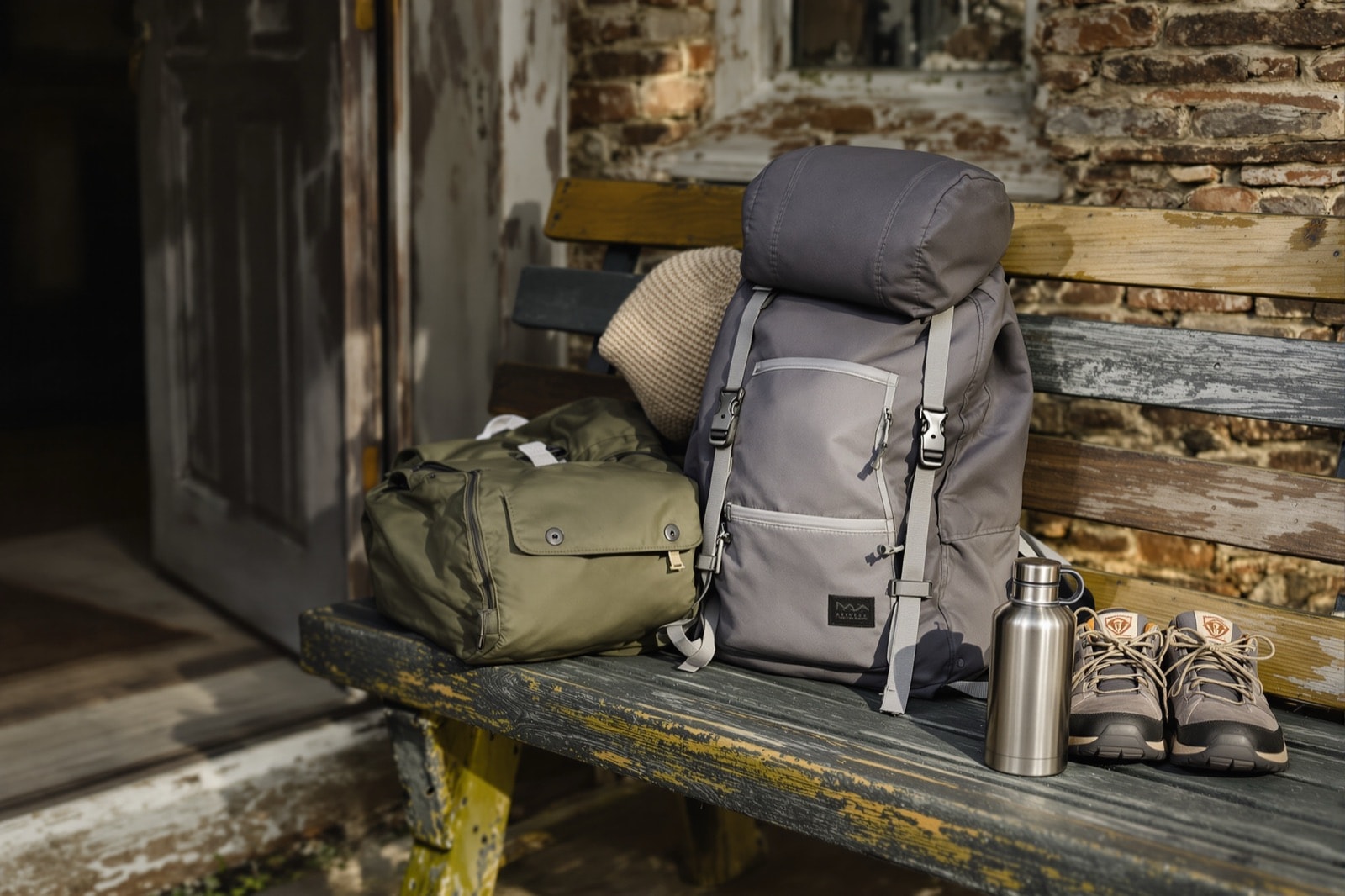
The one thing that matters: shoes
Anything with a bit of grip and a bit of give will do. Trainers, trail shoes, low walking shoes, or boots if the ground is genuinely rough. What does not work is smooth-soled leather shoes on wet grass, or anything with a heel on uneven ground.
You do not need technical footwear for a three-kilometre park loop, and organisers who imply otherwise make the event sound more demanding than it is. What you need is shoes you are prepared to get muddy. Harvard Health on walking makes the same point about comfortable, well-fitting shoes being the only real equipment walking requires.
If you are coming from or going to a meeting, carry the smart shoes and change at the car. This is normal practice and nobody comments on it.
Layers, not outfits
A walking group generates a lot of heat within the first fifteen minutes and then stops when it regroups. The comfortable answer is layers you can shed and put back on: a base layer, something warm, and something windproof or waterproof over the top.
A single heavy coat is the wrong solution — too hot walking, not enough standing still. A light windproof layer over a jumper handles most conditions better than anything more serious.
Staying presentable
Many people go to a netwalk from or to something else, and the reasonable ambition is to arrive looking unbothered rather than immaculate. A few things help:
- Dark or patterned trousers hide splashes; pale ones do not.
- A jacket that packs into a bag is more useful than one that has to be carried.
- A small rucksack keeps your hands free, which matters more than it sounds — hands in pockets closes the body language, and carrying a bag on one shoulder makes you walk crooked for an hour.
- Keep a towel in the car boot. This is the single most underrated piece of netwalking equipment.
Rain
Groups that walk in rain establish a rhythm; groups that cancel at the first grey sky never do. Light rain is entirely walkable with a hood and the right attitude, and there is a genuine camaraderie that comes out of it.
Two practical points. An umbrella is unworkable in a group — it takes a hand, it takes up the width of the path, and it puts a spoke at eye level for the person beside you. A hood is the answer. And glasses in the rain are a real problem with no good solution; a peaked cap under the hood is the usual workaround.
Cold, heat and wind
Cold. Extremities go first when you are walking at a conversational pace rather than working hard. Hat and gloves are worth more than another layer on the torso.
Heat. Move the start earlier, shorten the route, choose shade, and say clearly that people should bring water. Heat is more likely than cold to cause an actual problem on a walk, and it is taken less seriously.
Wind. The overlooked one. Wind does not merely make a walk uncomfortable — it makes conversation impossible, which defeats the entire point. On an exposed route in a stiff wind, everybody spends ninety minutes saying "sorry, what?". Sheltered routes on windy days, and no debate about it.
What organisers should say in advance
The joining information should be specific and brief:
- "Shoes you don't mind getting muddy" — plainer and more useful than "suitable footwear".
- Whether the ground is currently wet, and what the surface is.
- Bring water in warm weather.
- A waterproof if rain is forecast — and confirmation that the walk goes ahead in ordinary rain.
- Whether there is anywhere to change or leave a bag.
Setting expectations low and accurate is better than setting them high. Someone who arrives over-equipped for a park path is mildly amused. Someone who arrives under-equipped for a muddy field is not, and they do not come back.
The cancellation call
Have a policy, publish it, and stick to it. Ordinary rain, wind and cold are walking conditions. Ice on the route, high winds through woodland, a severe weather warning, flooding, or a heat warning are cancellation conditions. Make the call at a fixed time — the evening before is the usual convention — so that nobody is refreshing a phone in a car park.
An organiser who cancels predictably is trusted. An organiser who cancels by mood is not, and attendance quietly declines, because people stop planning around the date.